
Most travelers assume an eco-lodge in Costa Rica means sacrificing hot water, Wi-Fi, or a decent mattress for the sake of a rainforest view. That trade-off used to be real. In 2026, it is not. The mid-range eco-boutique sector has matured enough that $180 to $250 per night now buys private bathrooms, locally sourced breakfast, and genuine conservation funding — but only if you know which certifications hold weight and which properties use the word “eco” as a marketing sticker.
This guide breaks down five properties with current 2026 pricing, what the rates include, what they quietly exclude, and where the value actually sits. No affiliate links. No booking widgets. Just the numbers and the fine print.
What “Eco-Friendly” Actually Means in Costa Rica Right Now
The phrase gets thrown around loosely. Costa Rica has a formal certification program — the Certification for Sustainable Tourism (CST) — run by the national tourism board. Properties earn a rating from 0 to 5 based on environmental footprint, community engagement, and cultural preservation. A CST score of 4 or 5 means an auditor has verified the claims. A property calling itself “eco” with no CST badge usually means it installed a recycling bin and called it a day.
Then there is the private certification route. Some lodges pursue LEED certification for building design, or B Corp status for business practices. These carry real weight but cost money, which is why smaller family-run lodges often skip them even when their operations are genuinely sustainable. You have to read between the lines.
Three questions to ask before booking
- Where does the wastewater go? A legitimate eco-lodge treats graywater on-site. If the answer is vague, move on.
- Who owns the property? Locally owned lodges keep revenue in the community. Foreign-owned operations may still employ locals, but the profit leaves the country.
- What percentage of the rate funds conservation? The best properties state a specific number — 5%, 10%, a fixed dollar amount per night. “A portion of proceeds” is not an answer.
One common failure mode: assuming a high nightly rate equals high sustainability. That is not how it works. A $400 per night lodge can run diesel generators 24/7 while a $150 lodge operates on solar and employs 12 local families. Price and ethics do not correlate neatly here.
Five Eco-Boutique Hotels Worth the 2026 Rate
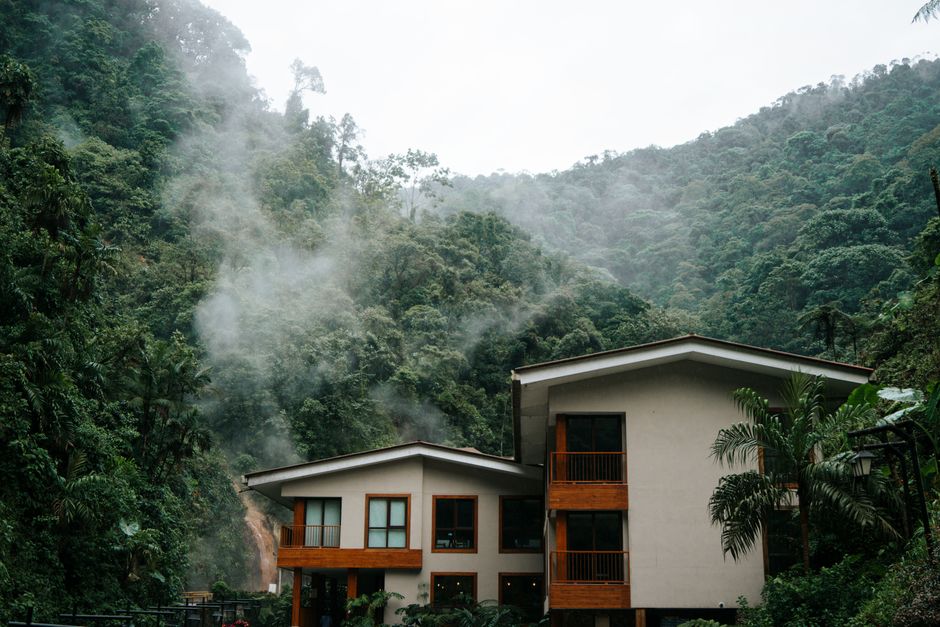
These five properties sit in different regions, serve different travel styles, and all have verifiable sustainability practices. Rates are 2026 high-season averages per night for two people, before taxes.
| Property | Location | 2026 Nightly Rate | CST Rating | What Stands Out |
|---|---|---|---|---|
| Danta Corcovado Lodge | Osa Peninsula | $185–$220 | 5 | Owned by a Costa Rican family; solar hot water; guides are all local naturalists |
| Finca Rosa Blanca | Heredia (coffee highlands) | $240–$280 | 5 | Organic coffee farm on-site; chemical-free landscaping; near airport for short stays |
| Pacuare Lodge | Pacuare River (Turrialba) | $290–$340 | 5 | Accessible only by raft; all-inclusive; hydro-powered; employs indigenous Cabécar community members |
| Lapa Rios Lodge | Osa Peninsula | $350–$420 | 5 | Protects 1,000 acres of private rainforest; rates include all meals and tours |
| Hotel Belmar | Monteverde | $210–$260 | 5 | Carbon-neutral certified; on-site microbrewery using local ingredients; farm-to-table restaurant |
Danta Corcovado Lodge is the strongest value pick for 2026. At $185 to $220 per night, it undercuts Lapa Rios by roughly 40% while sitting in the same Osa Peninsula ecosystem. The rooms are simple — concrete floors, ceiling fans, no air conditioning — but the wildlife viewing is exceptional. Scarlet macaws feed in the almond trees directly above the open-air restaurant. That is not a paid tour. That is breakfast.
Pacuare Lodge is the outlier on this list because it exceeds the $250 threshold. It earns a mention because the all-inclusive model changes the math. $290 to $340 per night covers rafting transport in and out, all meals, and guided hikes. Compared to a $220 lodge where you pay $60 per day for food and $80 for a tour, Pacuare often comes out cheaper on total trip cost. The trade-off is access — you cannot drive there, and the raft trip in takes about 90 minutes depending on river conditions.
What the Rate Actually Includes — and What It Does Not
This is where most travelers get burned. A $200 nightly rate at an eco-lodge is not comparable to a $200 rate at a standard hotel. The inclusions differ wildly.
At Danta Corcovado, the rate includes breakfast and a guided night walk. Dinner costs extra — usually $15 to $20 per person. At Hotel Belmar, breakfast is included but the farm-to-table dinner runs $35 to $50 per person without drinks. At Lapa Rios, everything is included, which is why the sticker price looks high but the total cost of stay often lands within $50 per day of a cheaper base-rate property once you add food and tours.
Typical exclusions to budget for
- Park entrance fees: Corcovado National Park charges $17 per day for foreigners. Lodges do not cover this.
- Guided excursions: Some lodges include one tour. Additional tours run $45 to $90 per person.
- Transfers: Remote lodges require 4×4 transport or raft access. Expect $50 to $120 per person each way.
- Alcoholic beverages: Almost never included. Cocktails at eco-lodges run $8 to $14.
- Taxes: Costa Rica adds 13% IVA. Some lodges quote rates before tax; some after. Always confirm.
The skeptic’s question here is fair: are these lodges just overpriced hotels with a green marketing budget? The answer depends on the property. Finca Rosa Blanca has published audit reports showing its coffee farm operations offset more carbon than the hotel generates. Hotel Belmar holds a carbon-neutral certification that requires third-party verification. Danta Corcovado’s owner, Rodolfo Jiménez, grew up on the land the lodge now sits on. These are not greenwashed facades — but you still pay a premium for the practices. Expect to spend 15% to 25% more than a comparable non-certified hotel in the same region.
When NOT to Book an Eco-Lodge

Eco-lodges are the wrong choice for some travelers. If you need air conditioning to sleep, most mid-range eco properties will disappoint. Danta Corcovado, Pacuare, and Lapa Rios all rely on natural ventilation and ceiling fans. The Osa Peninsula is hot and humid. A traveler who cannot sleep above 24°C should book a standard hotel in Manuel Antonio and take day tours instead.
Families with young children face another mismatch. Pacuare Lodge has a minimum age of 6 for the raft access. Lapa Rios discourages children under 6 during certain seasons due to trail conditions. The remote locations that make these lodges special also make them inconvenient if you need a pharmacy, a hospital, or a quick exit.
And if your primary goal is beach time, skip the eco-lodge category entirely. Most are positioned in rainforest or highland settings. The beaches near Danta Corcovado require a 20-minute drive and a walk. You are not getting a resort beach experience at these properties.
For travelers who want sustainability without the remoteness, the alternative is a certified boutique hotel in a town like Santa Teresa or Puerto Viejo. Properties like the Costa Verde Inn in Santa Teresa run on solar, employ locally, and put you within walking distance of restaurants and beaches — at a lower nightly rate than the rainforest lodges.
2026 Pricing Reality Check
Rates have climbed roughly 8% to 12% since 2026, driven by Costa Rica’s rising electricity costs and the country’s continued popularity as a post-pandemic destination. The $150 eco-lodge that existed five years ago is now a $190 property. The $200 property is now $220. This is not gouging — it is inflation hitting a country that imports most of its building materials and food staples.
That said, the mid-range eco-boutique sector still delivers better value than the luxury tier. Lapa Rios at $350 to $420 per night is a superb lodge, but Danta Corcovado at $185 to $220 delivers 80% of the same wildlife experience at roughly half the cost. The difference is polish: Lapa Rios has a pool, a spa, and more refined dining. Danta has none of those. If you are traveling for wildlife and genuine local connection, the cheaper option wins. If you want a wellness retreat that happens to be in the rainforest, pay for Lapa Rios.
Most travelers assume eco-friendly means expensive. The 2026 reality is more nuanced: you can stay at a certified, locally owned, genuinely sustainable lodge for under $250 per night — but you will trade air conditioning, easy access, and some creature comforts for the privilege. That trade is worth it for the traveler who came to Costa Rica for the rainforest, not the room service.