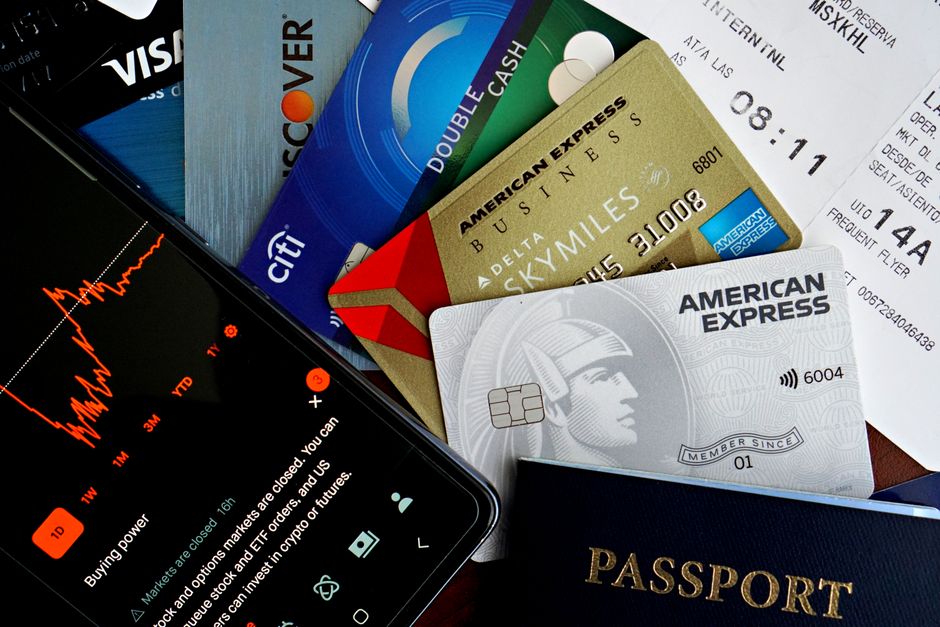
Can you board a domestic flight with a standard driver’s license in 2026? In most states, no. Not after May 7, 2026, when the Department of Homeland Security began full Real ID enforcement. Yet millions of Americans still show up at TSA checkpoints with non-compliant licenses. This is not legal advice — consult a licensed attorney if you have a specific legal question about your ID status. But here is what the rules actually say, and what you need in your wallet before you leave home.
The problem isn’t just flying. Domestic travel has quietly developed an ID gap: a mismatch between what travelers assume is valid and what airlines, hotels, rental agencies, and state troopers actually accept. This guide closes that gap. Six documents. Some obvious. Two that almost nobody thinks about until it’s too late.
1. Real ID or Passport: The TSA Baseline That Changed
Since May 7, 2026, the Transportation Security Administration no longer accepts standard-issue driver’s licenses from non-compliant states as sole identification for domestic air travel. This is not a rumor. It is federal law under the REAL ID Act of 2005, finally enforced.
A Real ID-compliant license has a star in the upper right corner. A gold star, a black star, or a star cutout in a gold circle. If your license lacks that star, you need a second form of ID at the checkpoint. The TSA lists acceptable alternatives: a U.S. passport, a U.S. passport card, a DHS trusted traveler card (Global Entry, NEXUS, SENTRI), a permanent resident card, or a state-issued enhanced driver’s license (available only in Michigan, Minnesota, New York, Vermont, and Washington).
Here is the failure mode I see constantly: someone books a flight, assumes their license works, and discovers at the checkpoint that their state issued a non-compliant license because they renewed by mail years ago. Now they’re on the phone with a family member, begging someone to overnight a passport to the airport. That fails. Passports don’t arrive in 45 minutes.
What should you do right now? Pull out your license. Look for the star. No star? Go to your state DMV website and check your renewal options. Most states now require an in-person visit with a birth certificate, Social Security card, and two proofs of address for a first-time Real ID. This takes weeks in some states. Do it before you book, not after.
My pick: If you fly more than twice a year, get a U.S. Passport Card ($65 for first-time adult applicants, valid 10 years). It is wallet-sized, Real ID-compliant, and works for domestic flights even if your license is non-compliant. It does not work for international air travel — that requires the full passport book ($165). But for domestic trips, the card is the cheapest permanent fix.
2. Hotel Check-In ID: Why Your Booking Name Must Match Exactly
Hotels in the United States require a government-issued photo ID at check-in. This is not a policy preference. It is standard practice across Marriott, Hilton, Hyatt, and IHG properties, and it protects both you and the hotel from fraud. But the ID gap here is subtle: the name on your reservation must match the name on your ID exactly.
Booked a room under “Mike Smith” but your license says “Michael Smith”? In most states, the front desk agent has discretion to accept it. But they don’t have to. And if you booked through a third-party site like Expedia or Booking.com, the name field may have auto-filled from your account profile, not your legal name. I’ve seen travelers turned away at midnight over a nickname mismatch.
What to do: Before you book, check your account profile on the booking site. Make sure the name matches your ID character for character. If you recently changed your name due to marriage or divorce, update your ID first. A marriage certificate is not a photo ID. Most hotel chains will not accept it alone.
For family travel, one adult ID is usually sufficient for check-in, but every adult staying in the room may be asked for ID in some states. Nevada and Florida properties are stricter than average, especially in resort areas with high fraud rates. Carry ID for every adult in your party.
Verdict: Treat your hotel reservation name like a legal document. Exact match. No nicknames. No abbreviations.
3. Rental Car Documents: The Three-Layer Requirement
Renting a car domestically requires three things: a valid driver’s license, a credit card in the renter’s name, and proof of insurance or a decision about the rental company’s coverage. The first two are non-negotiable at every major agency — Enterprise, Hertz, Avis, Budget, National, Alamo, Dollar, Thrifty.
The insurance decision is where travelers make expensive mistakes. Your personal auto insurance typically extends to rental cars within the United States, but only if you have comprehensive and collision coverage on your own policy. If you drive a beater with liability-only coverage, you have zero collision coverage on a rental. That means a fender bender in a Hertz Toyota Camry could cost you the full repair bill out of pocket.
Before you rent, call your auto insurer and ask two questions: “Does my policy cover rental cars?” and “What is my collision deductible?” If your deductible is $1,000, that’s your exposure. The rental company’s Collision Damage Waiver (CDW) — typically $25 to $40 per day — eliminates that exposure entirely. For a weeklong rental, that’s $175 to $280. Cheaper than a $1,000 deductible, but only if you actually crash. You won’t. Probably.
My position: If your personal auto policy includes rental coverage with a deductible under $500, decline the CDW. If you have liability-only or a high deductible, buy the CDW. It’s not a scam. It’s a transfer of risk, and sometimes the price is fair.
One more thing: some rental agencies now place a hold on your credit card for the estimated rental total plus $200 to $500 for incidentals. If you use a debit card, that hold comes out of your checking account immediately. Use a credit card. Not for points. For the hold.
4. Health Insurance Card: The Document Nobody Packs
You packed your license. Your passport card. Your hotel confirmation. Did you pack your health insurance card? Most people don’t. And then they end up in an urgent care clinic in another state with no proof of coverage.
Here’s the reality: your health insurance works differently outside your home state. If you have an HMO plan, out-of-state non-emergency care may not be covered at all. PPO plans typically cover out-of-state care, but at out-of-network rates unless the provider happens to be in your insurer’s national network. The card itself has the phone number you need to call for pre-authorization or to find an in-network provider.
What to pack: the physical card or a clear photo of the front and back saved to your phone. Also save your insurer’s 24/7 nurse line number. Most major insurers — UnitedHealthcare, Blue Cross Blue Shield, Aetna, Cigna — offer a nurse line that can tell you whether to go to urgent care or an emergency room. That call can save you $2,000.
For travelers on Medicare: Original Medicare does not cover most care outside the United States, but it does cover care anywhere in the U.S. Medicare Advantage plans vary by network. Check before you travel.
This is a document that costs nothing to pack and can save you thousands. Pack it.
5. Trip-Specific Documents: The Confirmation Number Fallacy
You booked a flight. You got a confirmation email. You assume that’s enough. It is not. Here is the failure mode: airlines change gate assignments, terminals, and even flight numbers after you book. Hotels oversell. Rental agencies lose reservations. Your confirmation email is a snapshot, not a live document.
What you actually need:
- Airline app with mobile boarding pass downloaded to your phone’s wallet — not just a screenshot, which can fail if the gate changes
- Hotel reservation number — the actual alphanumeric confirmation code, not just the email subject line
- Rental car confirmation number — especially if you booked through a third party like Priceline or Hotwire
- Pet vaccination records — if traveling with a dog or cat, most hotels require current rabies certificate
- Medication list — a written list of every prescription, dosage, and prescribing doctor
Here is a table that shows what each document actually does and what happens if you don’t have it:
| Document | What It Unlocks | Failure Without It | Backup Option |
|---|---|---|---|
| Real ID or Passport Card | TSA checkpoint | Boarding denial | Passport book |
| Hotel Confirmation Number | Check-in desk | No room held after 6pm | Call hotel directly |
| Rental Car Confirmation | Counter pickup | No car reserved | Walk-up rate (higher) |
| Health Insurance Card | Urgent care, ER | Full out-of-pocket billing | Insurer app login |
| Pet Vaccination Record | Hotel pet policy | Room refusal | Vet email PDF |
The pattern is simple: each document is a key. Lose the key, lose the door. But every door has a backup if you plan ahead.
6. The Digital Backup Rule: One Cloud, One Flash Drive, One Paper Copy
Documents get lost. Phones die. Wallets get stolen. The final document you need is not a single item — it’s a system. Three copies of everything: one in the cloud, one on an encrypted flash drive in your carry-on, one paper copy in your checked bag or hotel safe.
What goes in the system:
- Front and back of your driver’s license or passport card
- Health insurance card (front and back)
- Hotel and rental car confirmation numbers
- Emergency contact list — names, phone numbers, relationships
- Medication list with dosages and prescribing doctors
For the cloud copy, use a password-protected folder in Google Drive, Dropbox, or iCloud. Do not email documents to yourself. Email is not secure. For the flash drive, use hardware encryption — a Kingston IronKey or SanDisk with built-in password protection. For the paper copy, keep it separate from your wallet. If your wallet is stolen, your paper backup survives.
The cost of this system is under $30 for a flash drive. The value is avoiding a stranded, document-less night in a city where you know no one.
This is not legal advice — consult a licensed attorney for questions about specific ID requirements in your state. But the document gap is real, and it closes fast for people who prepare. Pack the six. Travel without fear.
The single most important takeaway: Your driver’s license is no longer enough for domestic air travel in 2026, and the fix — a Real ID or passport card — takes weeks to obtain, so check your wallet today, not the day before your flight.