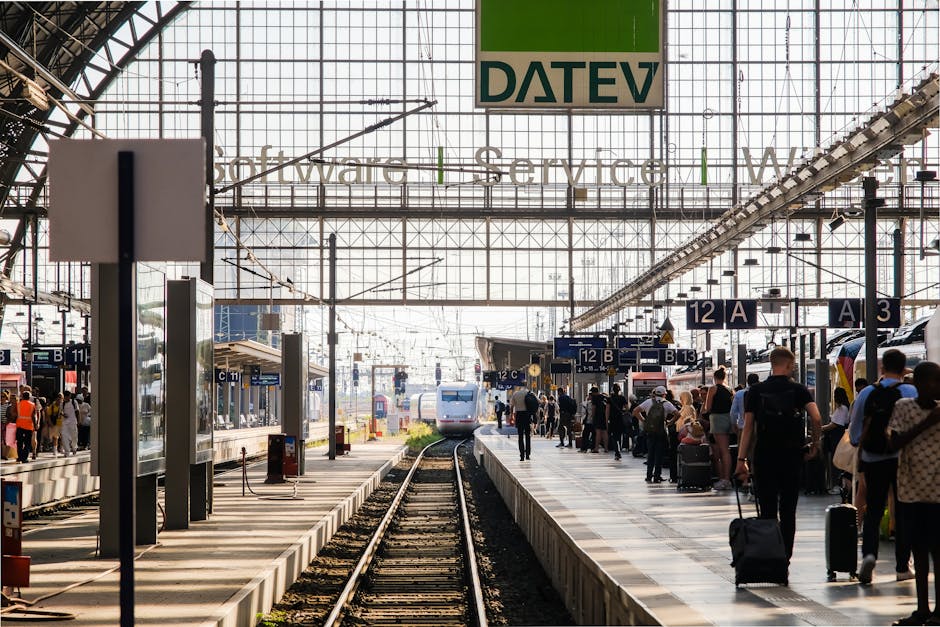
A two-week European train tour can cost €200 or €900 — for the exact same route. That gap isn’t a pricing error. It’s the difference between buying the right ticket at the right time versus defaulting to the first option that appears on a rail pass website.
Here’s what most planning guides won’t say upfront: the Eurail Global Pass is not always the cheapest option. Sometimes it’s not even close. But for certain trips, it’s the only thing that makes financial sense. The math depends on where you’re going, how many trains you’re catching, and whether you understand what “free travel” on a pass actually means.
This breakdown covers real 2026 prices, the hidden fees that routinely blindside first-time rail travelers, and which routes actually reward the pass buyer.
European Rail Pass Prices Side by Side: What You Pay in 2026
Rail passes come in two main flavors: Interrail (for European residents) and Eurail (for everyone else). Both are sold in flexible-day and continuous formats. Prices below are for adult standard class. Youth discounts (under 28) and senior reductions (60+) apply to both.
| Pass Type | Coverage | Adult Price (2026) | Best For |
|---|---|---|---|
| Interrail Global — 5 days/1 month | 33 countries | €261 | Short multi-country trips |
| Interrail Global — 10 days/2 months | 33 countries | €379 | Standard 2–3 week tours |
| Interrail Global — 15 days continuous | 33 countries | €358 | Fast-paced daily travel |
| Interrail Global — 1 month continuous | 33 countries | €510 | Extended backpacker trips |
| Eurail Global — 5 days/1 month | 33 countries | €285 | Non-European visitors, short trips |
| Eurail Global — 10 days/2 months | 33 countries | €415 | Non-European visitors, 2–3 week tours |
| Interrail One Country — France (3 days) | France only | €119 | France-only itineraries |
| Interrail One Country — Italy (3 days) | Italy only | €109 | Italy-only itineraries |
| Swiss Travel Pass — 4 days | Switzerland | €290 | Switzerland deep dives |
Both Interrail and Eurail adjust prices annually. Flash sales — usually in January and around European rail awareness campaigns — can knock 20–25% off select pass types. The mobile pass version (via the Eurail or Interrail app) avoids the €5–€10 physical delivery fee some vendors charge.
One Country vs. Global Pass
If your entire trip stays in one country, a One Country pass beats the Global almost every time. A 3-day Italy pass at €109 covers Rome to Florence on the Trenitalia Frecciarossa, Florence to Venice, and Venice to Milan. Those three journeys booked last-minute run €130–€180 combined on Trenitalia’s own site. Book 60 days out, though, and point-to-point wins by a margin wide enough to fund a decent dinner in Bologna.
Youth and Senior Discounts
Travelers under 28 get roughly 15–20% off Interrail and Eurail global passes. That pulls the 10-day Interrail Global down to around €290 — which significantly shifts the break-even math in favor of the pass for itineraries with frequent long-distance legs.
The Honest Math: Rail Pass vs. Point-to-Point Tickets
The rail pass industry has spent decades marketing the idea that a pass means freedom. It does — but freedom costs money, and sometimes quite a lot of it.
Run the numbers on the most popular 10-day backpacker circuit in Europe: London → Paris → Amsterdam → Berlin → Prague → Vienna → Budapest. Here’s what point-to-point tickets cost booked 6–8 weeks in advance:
- Eurostar London to Paris: €55–€90 standard class
- Eurostar/Thalys Paris to Amsterdam: €35–€80
- Deutsche Bahn ICE Amsterdam to Berlin: €29–€69
- FlixTrain or RegioJet Berlin to Prague: €10–€25
- RegioJet or CD Prague to Vienna: €15–€30
- OBB Railjet Vienna to Budapest: €19–€45
Total if you book smart: roughly €163–€339 for six segments. Not bad.
Now price the pass alternative. A 5-day Interrail Global costs €261. But here’s where most people miscalculate: high-speed trains in France, Spain, and Italy require mandatory seat reservations even with a valid pass. The Eurostar alone adds €30 per pass holder. TGV trains in France add €10–€30. Spanish AVE trains add €10–€30. Italian Frecciarossa adds around €10.
So your “free” pass on the London-Paris-Berlin route actually costs: €261 (pass) + €30 (Eurostar reservation) + €20 (TGV reservation) + optional Deutsche Bahn reservation. You’re past €311 before leaving Paris — and that’s with only 6 travel days used.
Point-to-point booked 8 weeks ahead beats the pass on that specific corridor. The pass earns its keep on longer, less predictable trips — especially through countries where reservation fees are low or optional: Austria, Switzerland, Germany’s regional network, and the Balkans.
Where the Pass Genuinely Wins
Switzerland is the clearest case. The Swiss Travel Pass covers virtually all trains, boats, and most cable cars within Switzerland, and Swiss trains carry no mandatory reservation fees. Spend 4+ days moving around Switzerland daily — Zurich to Lucerne, Interlaken to Grindelwald, Chur to St. Moritz — and the 4-day pass at €290 beats point-to-point by a substantial margin, particularly on scenic routes like the Glacier Express or the Bernina Express where the experience itself justifies the cost.
The Break-Even Point
A global rail pass starts making real financial sense when you’re taking 5+ long-distance journeys in 10 days across multiple countries with volatile last-minute pricing — Spain, France, Italy primarily. For Germany and Austria specifically, Deutsche Bahn and OBB offer fixed advance fares from €29 that remain available even 2–3 weeks out, so the pass advantage shrinks considerably on those corridors.
Skip the Pass If This Sounds Like Your Trip
Fixed itinerary. Fewer than four countries. Able to book at least six weeks ahead. In that case, point-to-point tickets will almost certainly cost less. The pass is a hedge against uncertainty — it pays off only when your schedule is genuinely open and you’re making routing decisions as you go.
Hidden Fees That Blow Up Most Train Tour Budgets
The pass price is not the total price. First-time European rail travelers routinely end up €100–€200 over budget because of fees that are not prominently disclosed at the point of purchase. Here’s the full list:
- Mandatory seat reservations on high-speed trains: Eurostar (€30), TGV France (€10–€30), Thalys (€13), Trenitalia Frecciarossa (€10), Renfe AVE Spain (€10–€30). These apply even with a valid pass. There is no workaround.
- Night train supplements: The OBB Nightjet network is expanding fast across Europe. A seat reservation on a Nightjet adds €3–€8 per pass holder, but a couchette berth adds €25–€44, and a private sleeper runs €50–€100 on top of your pass. The Vienna-to-Rome Nightjet can add €70+ in sleeper fees alone.
- UK domestic rail exclusions: Interrail and Eurail do not cover domestic UK trains. Only the cross-border Eurostar segment is included. Budget separately for any UK train travel — which can run £50–£150 depending on route and booking window.
- Platform and activation errors: Using the Eurail or Interrail mobile app, you must activate your travel day before boarding — not after. Forgetting to activate before the inspector arrives results in fines treated the same as traveling without a ticket. This is not a technicality; enforcement is real.
- Luggage storage: Not a rail fee, but if you’re moving cities daily, left-luggage lockers at major stations run €5–€10 per day. Over a 10-day trip, that’s a silent €50–€100 line item most budgets don’t include.
- First-class defaults on booking platforms: Trainline and Omio occasionally default to first class in certain search results. Standard class is comfortable on virtually every European high-speed route. Double-check your class selection before confirming.
Factor all of these in before comparing pass versus point-to-point. The real cost of most pass-based itineraries runs 20–35% higher than the pass sticker price once reservations are included.
Routes With the Best Price-to-Experience Ratio in Europe
Not all European train journeys are priced the same. Some corridors are genuinely excellent value. Others charge tourist-peak prices for a mediocre ride.
The Prague to Vienna corridor — operated by RegioJet and OBB Railjet — is consistently underpriced for what you get. RegioJet fares start at €15 for a 4-hour ride through the Bohemian countryside with complimentary coffee and a seat attendant. It’s one of the best-value rail experiences on the continent and rarely appears on recommendation lists because there’s no meaningful affiliate margin on a €15 ticket.
The Bernina Express (St. Moritz to Tirano, crossing the Swiss-Italian border) is UNESCO-listed and costs around €55–€70 point-to-point, or a reservation fee on top of a Swiss Travel Pass. For a mountain rail journey with viaducts at 2,253 meters, that price is honest.
The Barcelona to Madrid AVE via Renfe is a different story. Rack rate runs €80–€150, but Renfe sells “Promo” fares from €25–€40 if you book 2–3 months out on midweek departures. The 2.5-hour journey replaces a flight that costs similar money after baggage fees, security time, and airport transit — and drops you in the city center on both ends.
The London to Paris Eurostar is priced opportunistically. Standard fares start around €45–€80 booked well ahead, but surge past €200 in peak summer. Midweek departures in May or early June are the sweet spot. July and August Eurostar pricing rewards no one except people with unlimited budgets.
For the Balkans — Serbia, Bosnia, Montenegro — rail infrastructure is limited and fares are extremely cheap (€5–€20 per journey). The tradeoff is slow trains and sparse schedules. Bus networks like FlixBus or local operators cover these routes faster and more reliably. This is one region where the train romantic in you should yield to the practical traveler.
Pricing Questions European Rail Travelers Actually Ask
Is the Eurail Global Pass worth it for a standard 2-week trip?
Only if you’re covering 5+ countries with a genuinely flexible schedule. A fixed 2-week itinerary through France, Italy, and Spain with point-to-point tickets booked 6–8 weeks ahead will typically cost €150–€250 less than the equivalent Eurail pass plus mandatory reservation fees. The pass earns back its premium on open-ended trips where you might legitimately change plans mid-route — adding a spontaneous detour through Switzerland or adjusting your Austria leg on the fly.
What’s the cheapest way to connect major European cities?
For journeys over 5 hours, Ryanair and Wizz Air often undercut trains significantly — sometimes €20–€40 for routes that run €80–€150 by rail. But include transit time to budget airports (often 45–90 minutes from city centers), baggage fees, and the security process, and the real comparison narrows considerably. For trips under 4 hours, trains beat door-to-door flight time on almost every route in Western Europe.
Can you book European train tickets from outside Europe?
Yes. Trainline, Omio, and national rail apps like DB Navigator, SNCF Connect, and the Trenitalia app all work internationally. Trainline and Omio charge a booking fee of €1–€3 per ticket. Going direct to the operator’s own website avoids that fee and occasionally surfaces operator-exclusive promotional fares that third-party aggregators don’t show.
How far in advance should European train tickets be booked?
For high-speed routes in France and Spain: 90 days out if possible, 60 days minimum. For Germany, Austria, and Switzerland: 4–6 weeks is usually sufficient. For Eastern Europe: 1–2 weeks ahead is often fine. Demand is lower, and advance pricing benefits are minimal on most regional corridors east of Vienna.
This is not financial advice. Prices cited are based on publicly available fare data and typical 2026–2026 pricing ranges. Always verify current fares directly with rail operators before booking.